Dussehra, also known as Vijayadashami, is one of India’s most important festivals. It symbolizes the victory of good over evil and is celebrated with immense devotion and grandeur across the country. While the essence of the festival remains the same, the history of Dussehra and the way it is celebrated varies from state to state, with each region adding its unique cultural and religious flavor. You know more about Dussehra history and religion.
In this blog, we’ll explore the Dussehra history and religion, along with the diverse ways different Indian states celebrate the festival, each telling its own powerful story.
📖 Dussehra History and Religion
The origins of Dussehra are deeply rooted in Hindu mythology. The festival has two major stories associated with it:
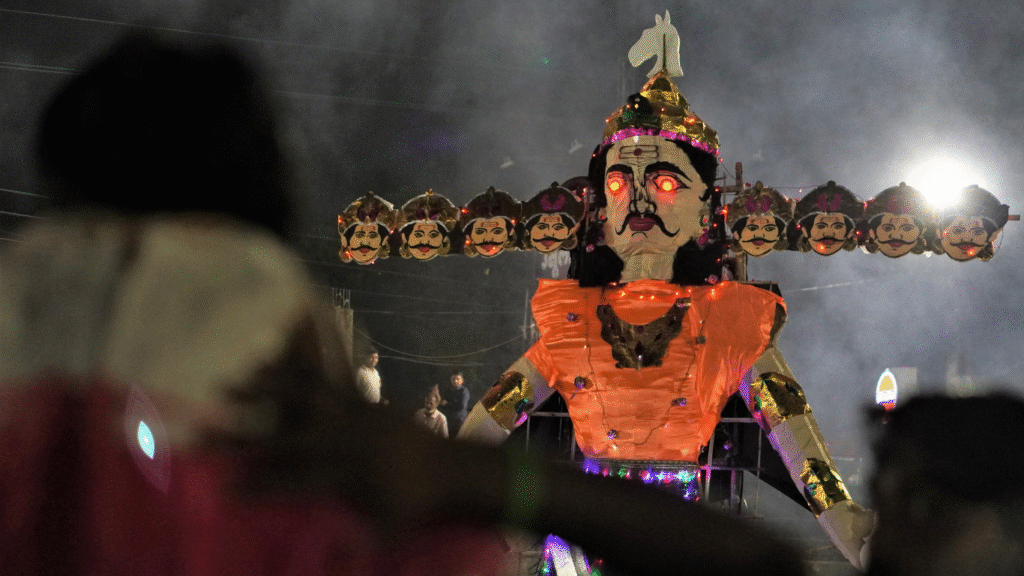
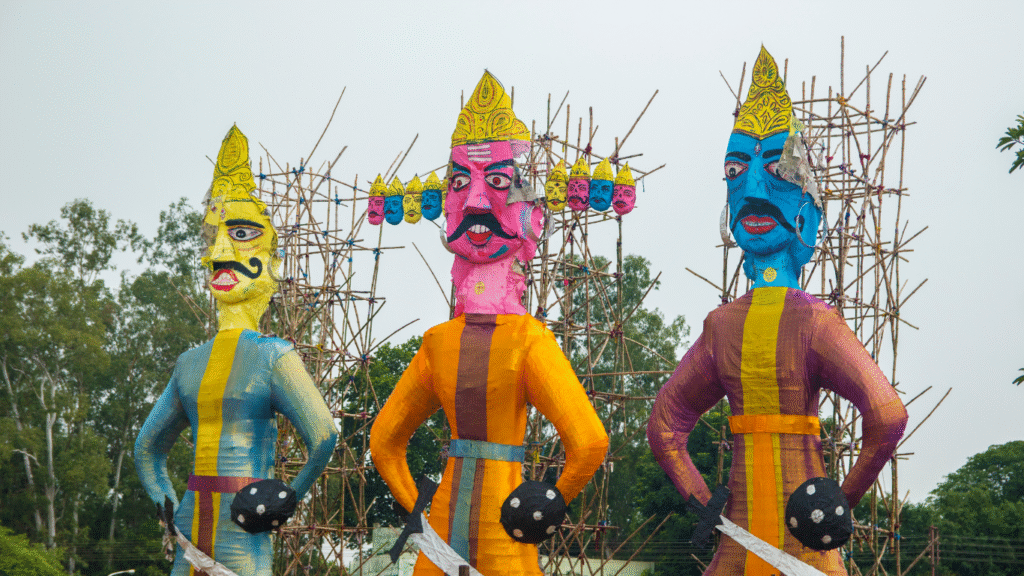
- The Ramayana Connection – In North India, Dussehra marks the victory of Lord Rama over the demon king Ravana. According to the epic Ramayana, Rama, with the help of Hanuman and his army, defeated Ravana to rescue Sita. Burning effigies of Ravana, Meghnath, and Kumbhkaran remains a highlight of the celebrations in this region.
- The Mahishasura Mardini Story – In many parts of India, especially in the East, Dussehra is linked to Goddess Durga. It is believed that on this day, Maa Durga defeated the buffalo demon Mahishasura after nine days of fierce battle, symbolizing the triumph of divine feminine power.
Both narratives highlight the eternal theme of truth and righteousness prevailing over arrogance and evil.
🎭 Different State Celebrations of Dussehra
India’s cultural diversity is beautifully reflected in the way Dussehra is celebrated across states.
1. North India – The Ram Leela and Ravana Dahan
In Uttar Pradesh, Delhi, and Punjab, Dussehra is marked by theatrical performances of the Ram Leela. The festival concludes with the grand Ravana Dahan, where huge effigies are set on fire amidst fireworks, signifying the destruction of evil.
2. West Bengal – Durga Puja
In West Bengal, Dussehra coincides with Durga Puja, where devotees worship Goddess Durga for nine days. The festival ends with Vijaya Dashami, when idols of the goddess are immersed in rivers, marking her return to Mount Kailash.
3. Mysore, Karnataka – Royal Dussehra
Karnataka’s Mysore celebrates Dussehra with royal grandeur. The Mysore Palace is lit up with thousands of lights, and a majestic procession with decorated elephants, traditional music, and dance showcases the cultural richness of the state.
4. Gujarat – Navratri and Garba Nights
In Gujarat, Dussehra is celebrated as part of Navratri, where people perform Garba and Dandiya Raas for nine nights. On the final day, Dussehra symbolizes the victory of Maa Durga and brings people together in joyous celebrations.
5. Tamil Nadu – Golu Festival
In Tamil Nadu, families set up Golu (arrangements of dolls and figurines) during Navratri and Dussehra. It is a spiritual and cultural celebration where friends and families exchange gifts and sweets.
6. Himachal Pradesh – Kullu Dussehra
Unlike most places, the Kullu Dussehra in Himachal Pradesh begins on Vijayadashami. Local deities from surrounding villages are brought in grand processions, making it a vibrant week-long festival.
🌸 Why Dussehra Holds Significance Today
Beyond its mythological roots, Dussehra continues to inspire people with its timeless message:
- Truth always prevails over lies.
- Goodness will always defeat evil.
- Unity and devotion bring people closer.
It’s not just a festival; it’s a reminder that moral values and righteousness are the true paths to victory.
🎯 Conclusion
The Dussehra history and religion remind us of India’s rich cultural tapestry, where myths and traditions blend to create vibrant celebrations. From the fiery effigies in North India to the royal grandeur of Mysore and the spiritual devotion of West Bengal, every state adds its own soul to the festival.
As we celebrate Dussehra, we are reminded that no matter how strong evil seems, goodness will always shine through. That is the true spirit of this festival.